September is Happy Healthy Cat Month, and we're continuing the celebration by talking about what makes our cats wild: play!
Every cat loves something different like chasing a wand toy across the living room, attacking your feet under the blankets, climbing to the highest point in the house, or patiently waiting to ambush a toy mouse. There's actually a reason behind many of their favorite games.
Just like we talked about in our last blog on cat hydration, we can look at a cat's evolutionary history to better understand some of the behaviors we see in our pets today!
Wild Hunter to House Cat
Our house cats might spend their days sleeping on their cat trees and waiting for us to serve dinner, but they still share many instincts with their wild ancestors (African Wildcat).
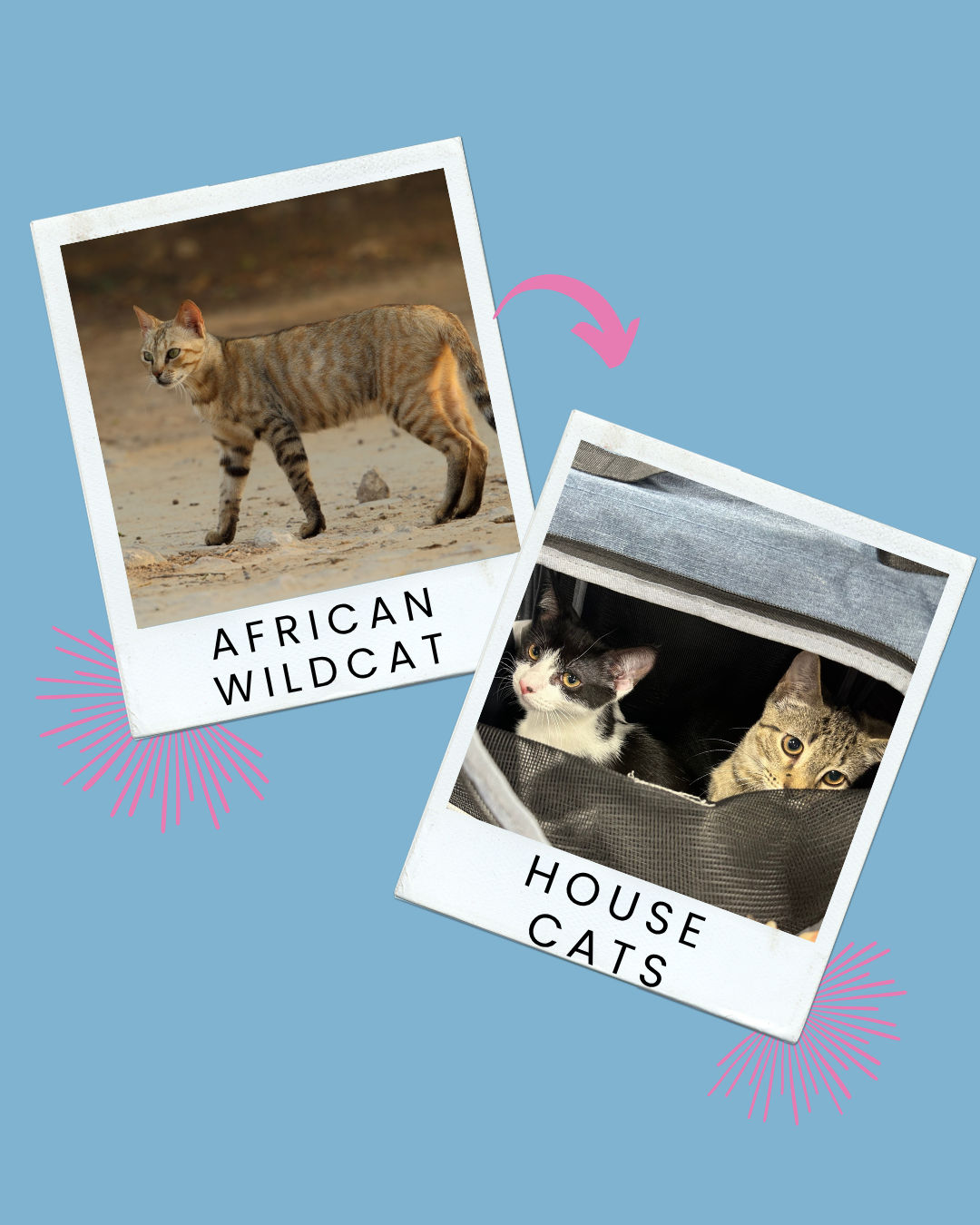
Cats are natural predators, and hunting requires much more than running after prey. A successful hunt involves watching, stalking, chasing, pouncing, grabbing, and biting. If you have a kitten you may notice that they begin practicing many of these skills early on during play, and those instincts don't just disappear when they grow up!
That's why your cat may duck behind the couch before launching themselves at a toy or wiggle their butt before pouncing. To us, it's adorable but to your cat's brain, they're practicing behaviors their species has relied on for generations.
Our cats are actually built for this! They evolved with retractable claws, long flexible spines, low-light vision, and quick instincts to make them good hunters. Did you know that cat ears are controlled by 32 different muscles allowing them to rotate 180 degrees for better hearing when stalking prey?
We can set their wild side free by providing different types of play; it gives our indoor cats safe and appropriate ways to express those natural behaviors.
Stalk & Pounce
Have you ever watched your cat freeze, crouch down low, and stare intensely at a toy before suddenly pouncing? They're practicing part of their natural hunting sequence!
Try slowly dragging a teaser wand, toy mouse, or another one of their favorite toys along the ground going in different directions and occasionally letting it disappear behind furniture. After they’ve stalked for a while let them catch it! Catching their "prey" gives your cat the opportunity to complete the game instead of endlessly chasing something they can never capture.
If you’re playing with a laser pointer try letting it land on a treat at the end or give one to them. This will help nurture the reward system in their brain and provide a natural closure to the activity. Having a treat at the end is like dessert after dinner and lets them naturally realize playtime is over and enter a relaxed state.
Chase
For some cats their favorite part is the chase and they will happily run after their favorite toy for hours!
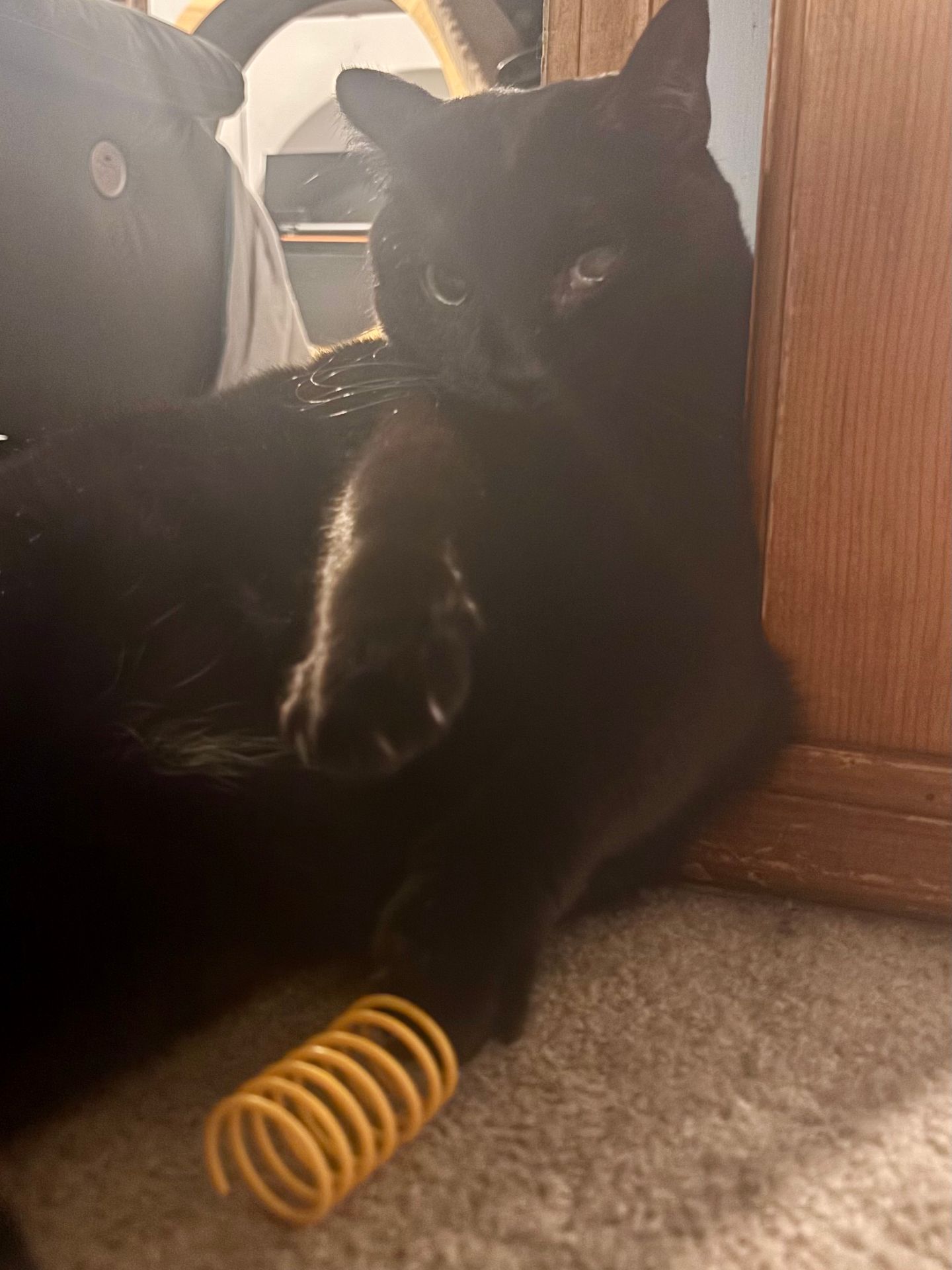
Wand toys, rolling balls, springs, and toys that skitter across the floor can encourage your cat to run, chase, and change direction. This type of play is a great way to get your cat moving while tapping into their instinct to pursue prey.
My friend's cat's favorite toy are springs, you can get ones in bright colors so it’s easier for them to see! They love to bounce them all around the house, chase after them together, and even play fetch!
Every cat has their own hunting style, too. One cat might go crazy for something fluttering through the air like a bird, while another would much rather chase a mouse-like toy across the floor.
Grab, Kick & Bite
If you've ever seen your cat grab a toy with their front paws and furiously kick it with their back legs, then you've seen the famous bunny kick!
Larger toys and kickers give cats an appropriate target for grabbing, wrestling, biting, and kicking. These toys can be especially useful for cats who like rougher play. Giving them something appropriate to wrestle with can also help keep your hands from becoming a toy!
Search & Solve
Hunting isn't just physical, it requires your cat to use their brain, too.
Puzzle feeders, treat-dispensing toys, and snuffle-style activities encourage cats to search and problem-solve to get their reward. You can make this as simple or complicated as your cat enjoys. Try hiding a few treats in different spots around the room, f your cat loves it you can try a wobble toy they they have to push to get treats outs, or a puzzle toy they need to solve to get their treats.
For food-motivated cats, making them "work" for a portion of their meal can be a really fun way to combine play time with dinnertime.
Climb & Explore
Cats don't experience their environment only from the floor. Being able to climb and observe their surroundings from above can be an important part of creating an enriching environment.
Cat trees, shelves, window perches, tunnels, and boxes give your cat opportunities to climb, hide, investigate, and observe. Try buying a cat tunnel and putting treats in the middle. I bet your cat will play in and around the tunnel for a while. It also offers them another space to hide in wait for a teaser wand!
Find Your Cat's Play Style
Not every cat wants to play the same way, and that's okay!
A kitten might happily chase a wand around the room for twenty minutes, while an older cat may prefer watching and stalking before making one perfectly timed pounce. Some cats love toys that fly through the air, while others are much more interested in something crawling across the floor.
Try offering different textures, movements, sounds, and styles of toys to figure out what activates your cat's inner hunter. Changing their environment with things like cat trees and tunnels can also be a way to make them more excited about a new toy.
You can also rotate toys instead of leaving everything out all the time. Put a few away and bring them back later, you may find that an old toy suddenly becomes exciting again!
Play With a Purpose
Play isn't just about keeping your cat entertained. It gives them an outlet for behaviors that are deeply rooted in what it means to be a cat.
The next time you see your cat stalking a wand, chasing a spring, wrestling a kicker, or searching for a hidden treat, remember: their ancestral wild instincts are still in there.
So this Happy Healthy Cat Month, give your cat an opportunity to stalk, chase, pounce, catch, climb, and explore!